Explore
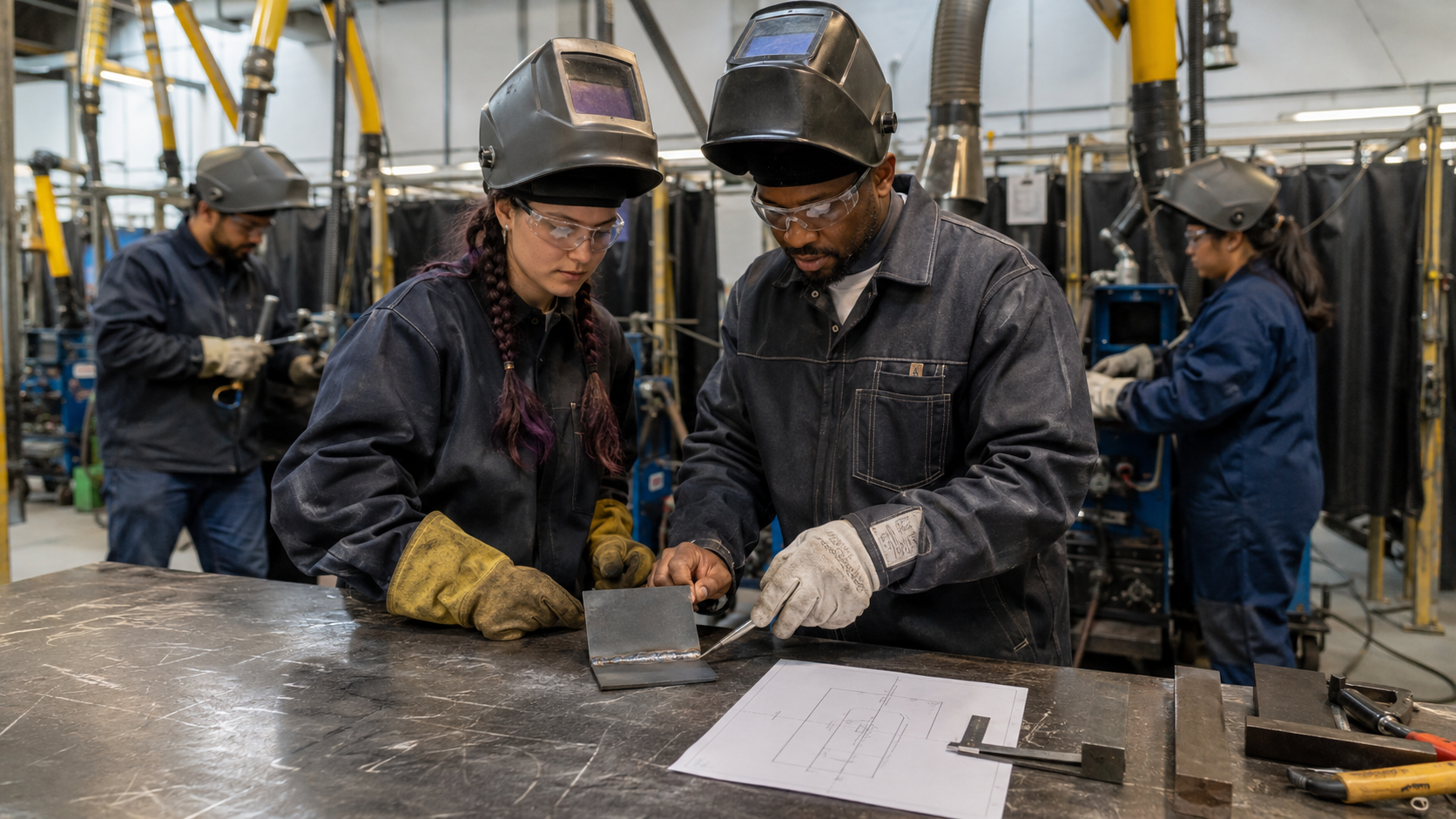
Try manufacturing, metalwork, design, shop projects or a supervised welding experience.
 Educator hub
04 · HOW · ASSEMBLE PATH
Ontario’s registered apprenticeship combines paid workplace learning with three levels of in-school training and a certifying exam.
These are Skilled Trades Ontario’s general figures. Completion varies by progress, training delivery, employer and opportunity to practise the required competencies.
THE PATHWAY
Try manufacturing, metalwork, design, shop projects or a supervised welding experience.
Complete Grade 12 and build mathematics, drawing, communication and safe-work foundations. Ask about co-op, OYAP, SHSM and dual credits.
An Ontario sponsor may be an employer, union or group responsible for apprenticeship training.
Register a Training Agreement through Ontario’s apprenticeship system.
Complete signed-off workplace competencies and 720 hours of in-school training across three levels.
Complete the apprenticeship and pass the certifying exam for an Ontario Certificate of Qualification and Red Seal endorsement.
Add process, position, code, inspection, supervisory or business qualifications as your goals require.
START WHILE IN SCHOOL
ONTARIO ENTRY PICTURE
Ontario apprenticeship applicants must be at least 16.
Have legal permission to work in Canada.
The STO trade report lists Grade 12 as the academic entry grade.
Secure an Ontario apprenticeship sponsor.
CERTIFICATION
Welder is a non-compulsory Ontario trade. Certification is valuable but not generally required merely to practise the trade. However, Skilled Trades Ontario warns that certain welding tasks legally require separate certification from the Technical Standards and Safety Authority.
ADVANCED SPECIALIZATION
Underwater welders are occupational divers first: welding certification alone does not qualify someone to work underwater. In Canada, commercial-diver competency is based on the CSA Z275.4 framework, and the Diver Certification Board of Canada certifies divers and accredits training establishments.
This career carries serious hazards, including pressure and decompression exposure, entanglement, low visibility, contaminated water, electricity and changing water conditions. It must never be presented as ordinary recreational scuba diving.
See DCBC-accredited Canadian training establishments ↗EVIDENCE BASE
Regulated, numerical and time-sensitive claims link to the authority used. Accessed and reviewed August 24, 2026.
Continue in your Trade Tracks Educator Hub.