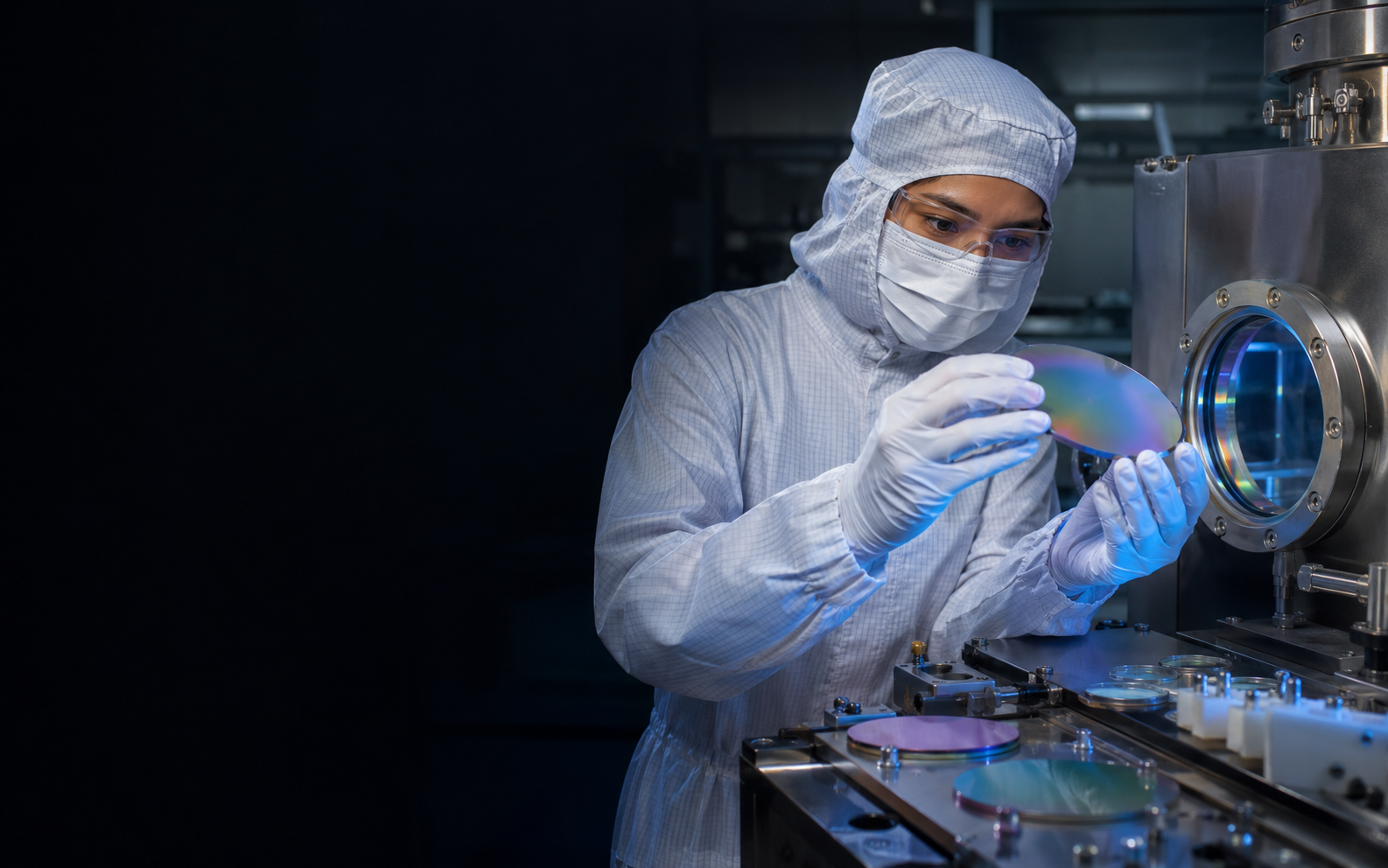
Thin Film Technician overview

01 · WHAT · PRODUCE PATH

What is the Thin Film Technician trade?

A Thin Film Technician works with:

Thin Film Technician in a representative work setting

THE CORE OF THE WORK

Inspect. Diagnose. Repair. Improve.

A Thin Film Technician works with:

Not every Thin Film Technician performs every task. The mix changes with the employer, sector, workplace, equipment and level of responsibility.

TOOLS & TECHNOLOGY

Tools used with judgment

vacuum deposition and sputtering systems, evaporation sources and thickness monitors, substrate cleaning and handling stations, spectrophotometers and optical test equipment, clean-room, leak-test and process-control tools.

WORKING CONDITIONS

Understand the environment

high-vacuum and high-voltage equipment; clean-room garments and contamination controls; fragile or valuable substrates; controlled chemicals and coating materials; recipe accuracy and detailed process records.

SAFETY FIRST

Learn the hazards before the task

Training, supervision, safe procedures, appropriate PPE and stopping when conditions are uncertain are essential. Requirements vary by workplace and assignment.

STRENGTHS THAT GROW

Skill develops through practice.

process disciplineprecisionpatient observationtechnical troubleshootingquality awareness

ADVANCED SPECIALIZATIONS

One trade can lead to very different work.

These are advanced work directions within or adjacent to Thin Film Technician, not promises of separate credentials or pay. Requirements vary by employer, equipment, experience and any additional training or authorization.

Optical coatings

Deposit anti-reflection, mirror, filter and beam-control layers on lenses.

Sputtered films

Control plasma-based deposition for durable optical or electronic coatings.

Evaporated films

Manage source materials, vacuum, heat and rate in thermal or electron-beam systems.

Semiconductor and sensor layers

Produce functional films for electronic, sensing and microfabricated devices.

Substrate preparation

Clean, mask, fixture and handle surfaces without introducing contamination.

Process metrology

Measure thickness, transmission, reflection, adhesion and uniformity.

Coating process leadership

Advance into recipe development, equipment support, quality or production supervision.
EVIDENCE BASE

Sources & verification

Regulated, numerical and time-sensitive claims link to the authority used. Accessed and reviewed August 25, 2026.

CONTINUE THE CAREER CENTREWHY

Why might this career fit me?