TOOLS & TECHNOLOGY
Tools used with judgment
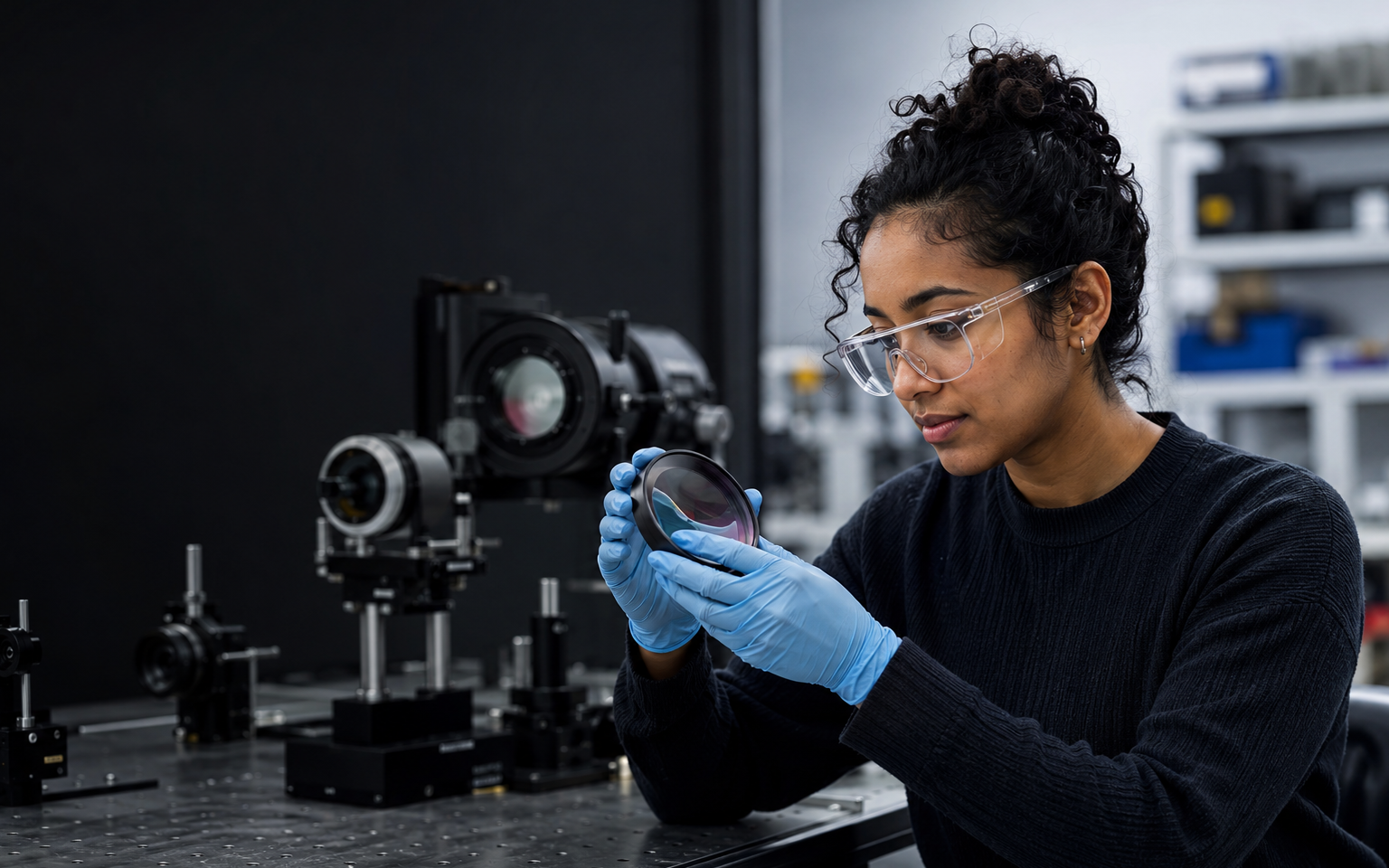
grinding, generating and edging machines, lapping and polishing equipment, interferometers and optical comparators, centring and coating systems, micrometers, gauges and clean-room tools.
 Educator hub
01 · WHAT · PRODUCE PATH
An Optics Technician (Lens and Prism Maker):
THE CORE OF THE WORK
An Optics Technician (Lens and Prism Maker):
Not every Optics Technician (Lens and Prism Maker) performs every task. The mix changes with the employer, sector, workplace, equipment and level of responsibility.
TOOLS & TECHNOLOGY
grinding, generating and edging machines, lapping and polishing equipment, interferometers and optical comparators, centring and coating systems, micrometers, gauges and clean-room tools.
WORKING CONDITIONS
fragile components and valuable materials; abrasive slurries and controlled chemicals; close visual inspection and precision handling; cleanliness and contamination controls; tight surface, geometry and coating specifications.
SAFETY FIRST
Training, supervision, safe procedures, appropriate PPE and stopping when conditions are uncertain are essential. Requirements vary by workplace and assignment.
STRENGTHS THAT GROW
ADVANCED SPECIALIZATIONS
These are advanced work directions within or adjacent to Optics Technician (Lens and Prism Maker), not promises of separate credentials or pay. Requirements vary by employer, equipment, experience and any additional training or authorization.
Shape glass or crystalline blanks to specified curves, thickness and diameter.
Produce smooth optical surfaces while controlling figure and material removal.
Create accurate angles and planar surfaces for beam steering and measurement.
Align optical and mechanical axes and finish components to assembly dimensions.
Prepare and support deposition processes that control reflection or transmission.
Use interferometry and precision instruments to verify surface and optical performance.
Progress into prototype work, process development, quality or production leadership.
EVIDENCE BASE
Regulated, numerical and time-sensitive claims link to the authority used. Accessed and reviewed August 25, 2026.
Why might this career fit me?