TOOLS & TECHNOLOGY
Tools used with judgment
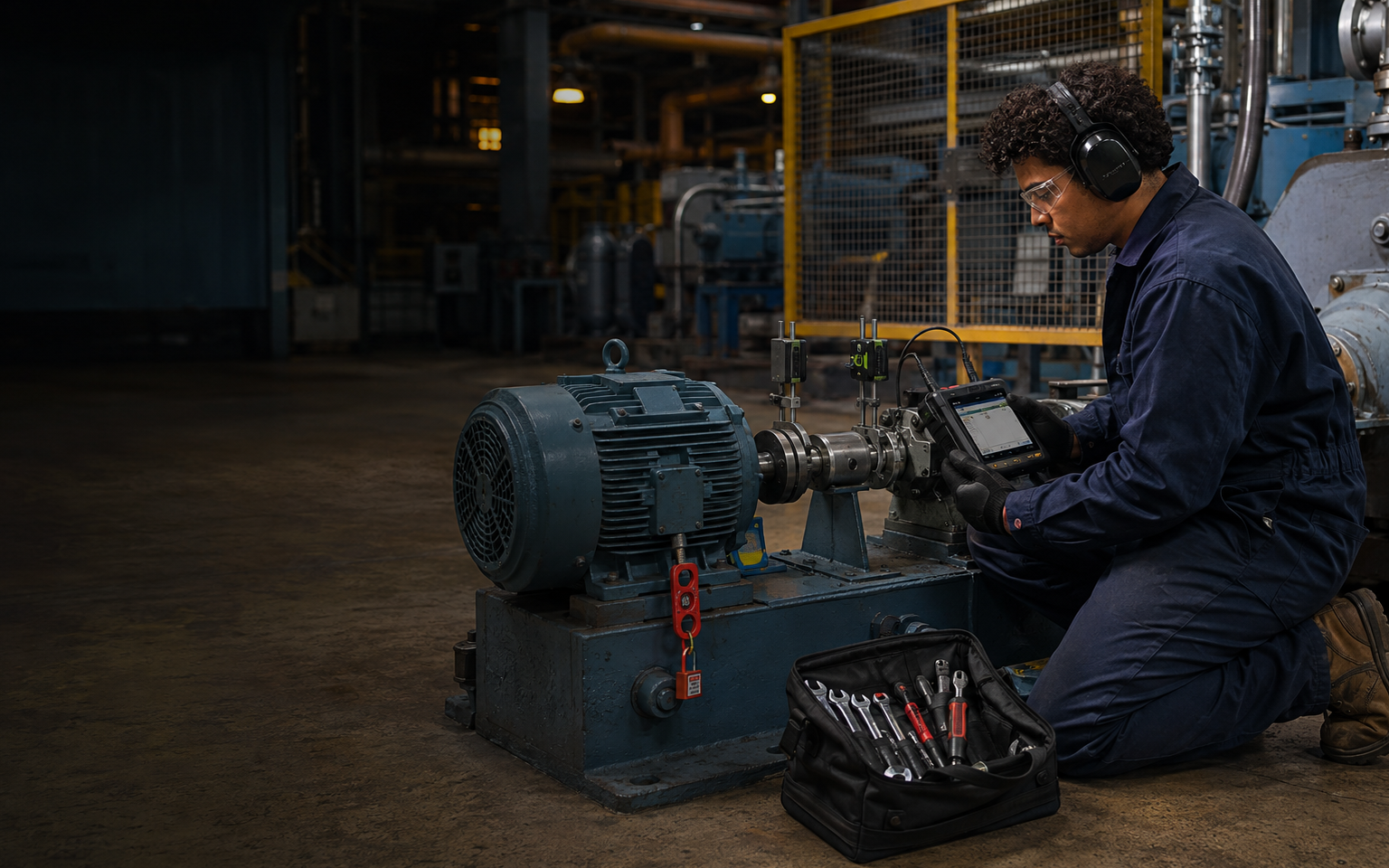
laser alignment systems, vibration analyzers, rigging and lifting gear, welding equipment, precision measurement tools.
 Educator hub
01 · WHAT · ASSEMBLE PATH
An Industrial Mechanic Millwright works on industrial machinery, mechanical equipment and components, including mechanical, pneumatic, hydraulic, fuel, lubrication, cooling and exhaust systems, and pumps, fans, tanks, conveyors, presses, generators and pneumatic and hydraulic controls. Specifically, an Industrial Mechanic Millwright:
THE CORE OF THE WORK
An Industrial Mechanic Millwright works on industrial machinery, mechanical equipment and components, including mechanical, pneumatic, hydraulic, fuel, lubrication, cooling and exhaust systems, and pumps, fans, tanks, conveyors, presses, generators and pneumatic and hydraulic controls. Specifically, an Industrial Mechanic Millwright:
Not every Industrial Mechanic Millwright performs every task. The mix changes with the employer, sector, workplace, equipment and level of responsibility.
TOOLS & TECHNOLOGY
laser alignment systems, vibration analyzers, rigging and lifting gear, welding equipment, precision measurement tools.
WORKING CONDITIONS
operating industrial sites; shutdowns and callouts; stored energy and guarding hazards; heights and confined spaces; noise, heat and dust.
SAFETY FIRST
Training, supervision, safe procedures, appropriate PPE and stopping when conditions are uncertain are essential. Requirements vary by workplace and assignment.
STRENGTHS THAT GROW
ADVANCED SPECIALIZATIONS
These are advanced work directions within or adjacent to Industrial Mechanic Millwright, not promises of separate credentials or pay. Requirements vary by employer, equipment, experience and any additional training or authorization.
Inspect and service machinery.
Align shafts and drives.
Use vibration and thermal data.
Maintain material-handling systems.
Repair pumps, valves and actuators.
Overhaul critical assets.
Advance into reliability or supervision.
EVIDENCE BASE
Regulated, numerical and time-sensitive claims link to the authority used. Accessed and reviewed August 25, 2026.
Why might this career fit me?