TOOLS & TECHNOLOGY
Tools used with judgment
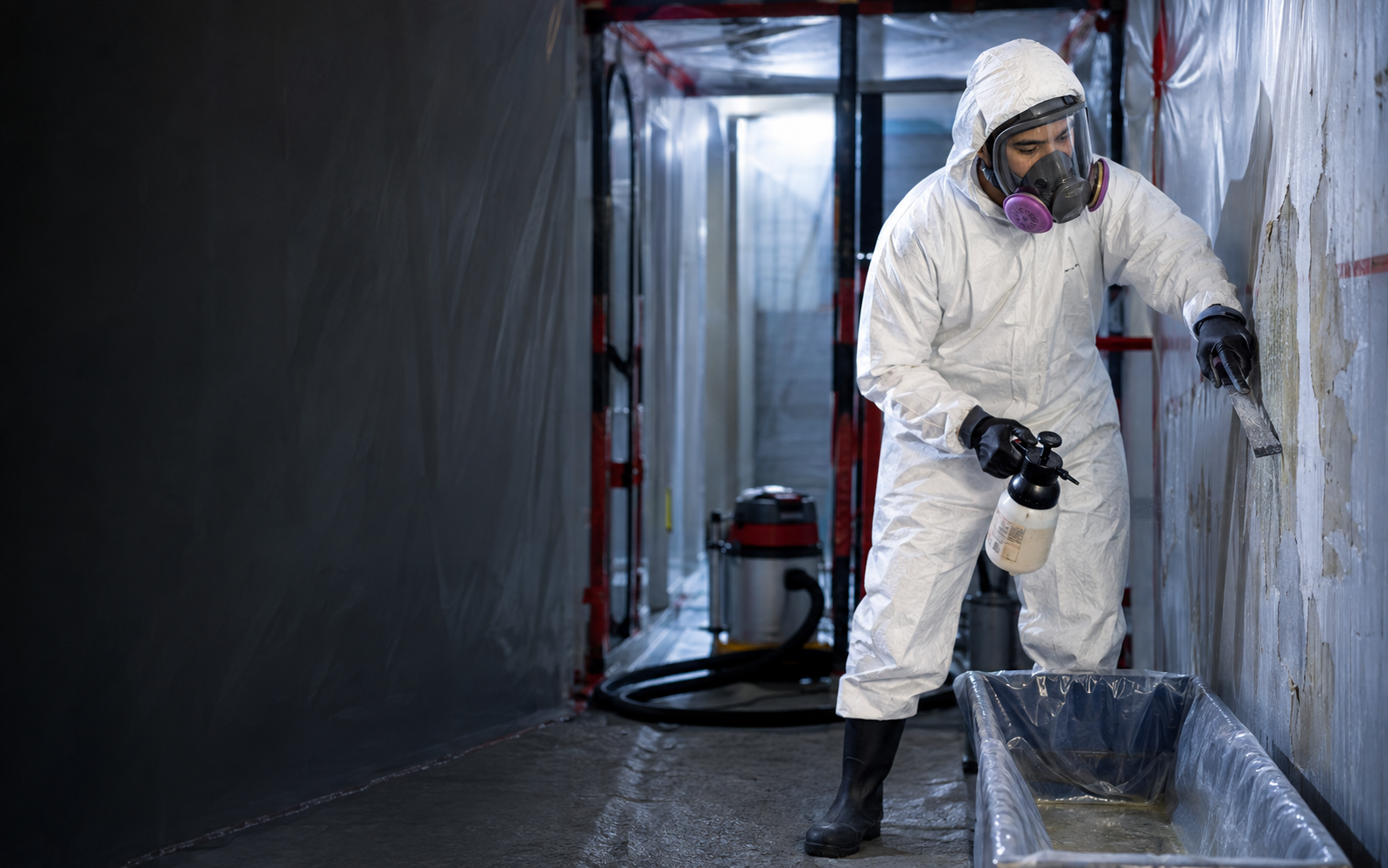
respirators and protective suits, negative-air units, decontamination systems, HEPA vacuums, air-monitoring instruments.
 Educator hub
01 · WHAT · HELP PATH
A Hazardous Materials Worker identifies, removes, packages, transports and disposes of hazardous materials such as asbestos, mould, lead, mercury, and other biological harzards. Specifically, a Hazardous Materials Worker:
THE CORE OF THE WORK
A Hazardous Materials Worker identifies, removes, packages, transports and disposes of hazardous materials such as asbestos, mould, lead, mercury, and other biological harzards. Specifically, a Hazardous Materials Worker:
Not every Hazardous Materials Worker performs every task. The mix changes with the employer, sector, workplace, equipment and level of responsibility.
TOOLS & TECHNOLOGY
respirators and protective suits, negative-air units, decontamination systems, HEPA vacuums, air-monitoring instruments.
WORKING CONDITIONS
strict containment zones; respiratory and biological hazards; heat stress in protective clothing; regulated waste handling; detailed clearance procedures.
SAFETY FIRST
Training, supervision, safe procedures, appropriate PPE and stopping when conditions are uncertain are essential. Requirements vary by workplace and assignment.
STRENGTHS THAT GROW
ADVANCED SPECIALIZATIONS
These are advanced work directions within or adjacent to Hazardous Materials Worker, not promises of separate credentials or pay. Requirements vary by employer, equipment, experience and any additional training or authorization.
Remove material under regulated controls.
Correct contaminated building areas.
Contain and remove lead coatings.
Handle contaminated materials safely.
Build negative-pressure work zones.
Package, label and transfer hazardous waste.
Advance into supervision or safety.
EVIDENCE BASE
Regulated, numerical and time-sensitive claims link to the authority used. Accessed and reviewed August 25, 2026.
Why might this career fit me?