TOOLS & TECHNOLOGY
Tools used with judgment
professional knives and hand tools, ranges, ovens, grills and fryers, mixers, processors and slicers, thermometers and food-safety systems, inventory and recipe-costing software.
 Educator hub
01 · WHAT · PRODUCE PATH
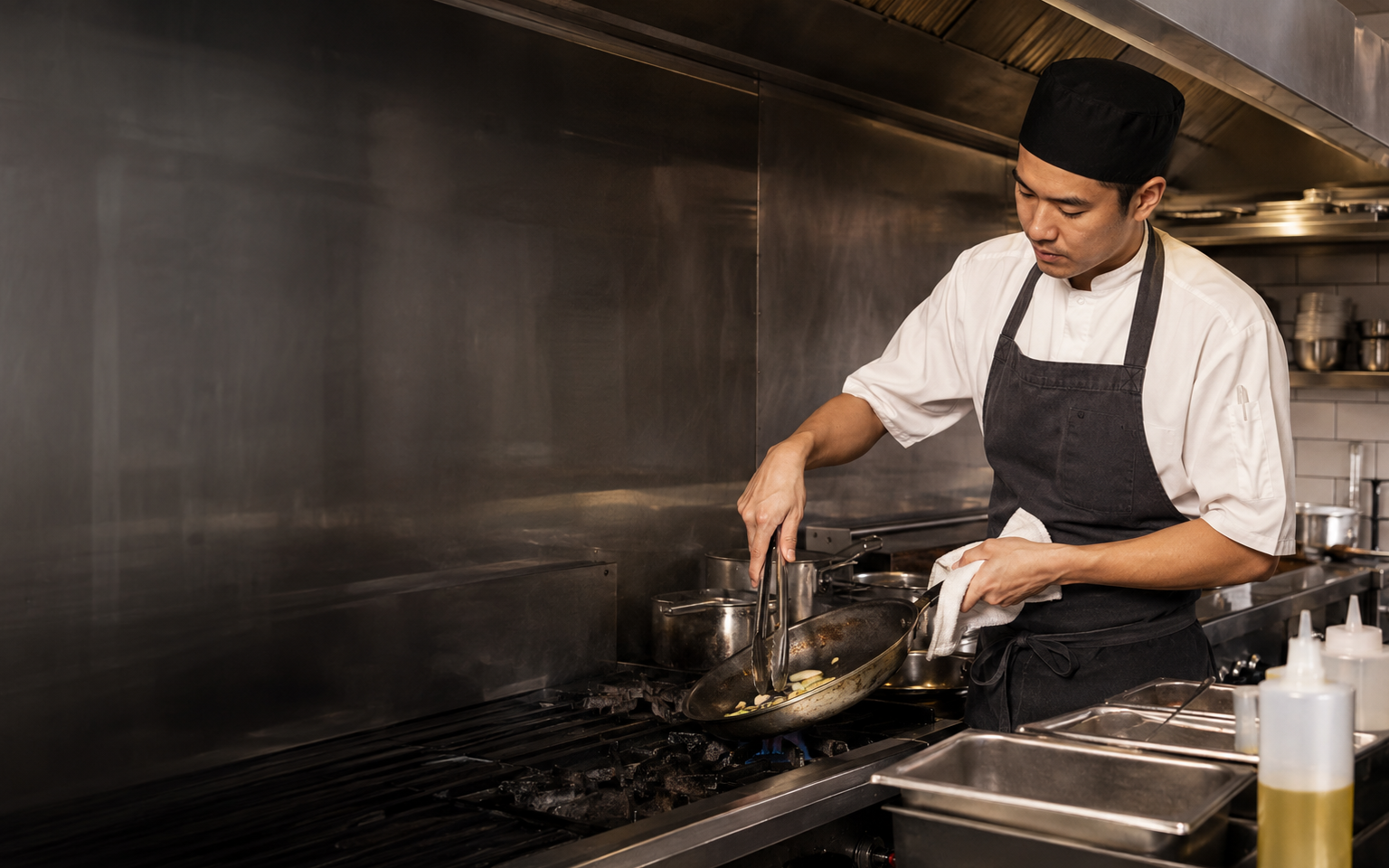
A Cook prepares a wide range of foods for public consumption in various settings, for small or large groups or individual dishes in restaurants and test kitchens. Specifically, a Cook:
THE CORE OF THE WORK
A Cook prepares a wide range of foods for public consumption in various settings, for small or large groups or individual dishes in restaurants and test kitchens. Specifically, a Cook:
Not every Cook performs every task. The mix changes with the employer, sector, workplace, equipment and level of responsibility.
TOOLS & TECHNOLOGY
professional knives and hand tools, ranges, ovens, grills and fryers, mixers, processors and slicers, thermometers and food-safety systems, inventory and recipe-costing software.
WORKING CONDITIONS
hot, fast-paced service periods; sharp tools and burn hazards; long periods standing and lifting; evening, weekend and holiday shifts; strict sanitation and allergen controls.
SAFETY FIRST
Training, supervision, safe procedures, appropriate PPE and stopping when conditions are uncertain are essential. Requirements vary by workplace and assignment.
STRENGTHS THAT GROW
ADVANCED SPECIALIZATIONS
These are advanced work directions within or adjacent to Cook, not promises of separate credentials or pay. Requirements vary by employer, equipment, experience and any additional training or authorization.
Coordinate grill, sauté, fry, pantry and finishing stations during live service.
Build deep knowledge of a culinary tradition, its ingredients and techniques.
Plan and execute consistent meals for large groups and off-site events.
Prepare high-volume food within nutrition, texture and allergy requirements.
Develop bread, dessert and pastry production skills within a culinary kitchen.
Manage menus, inventory and full-meal production with limited support.
Advance to sous-chef, chef, food-service manager, caterer or restaurant owner.
EVIDENCE BASE
Regulated, numerical and time-sensitive claims link to the authority used. Accessed and reviewed August 25, 2026.
Why might this career fit me?