TOOLS & TECHNOLOGY
Tools used with judgment
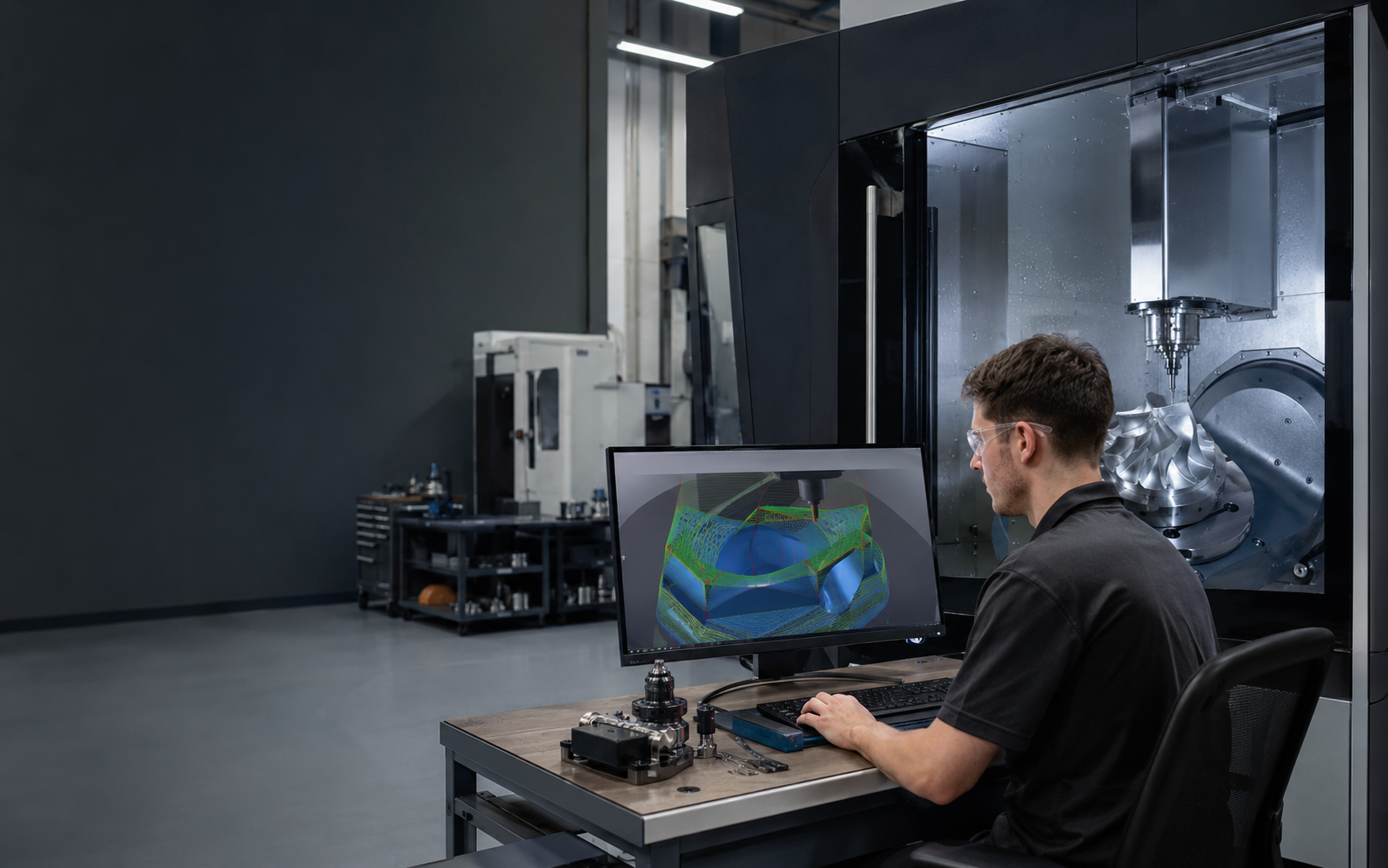
CAD/CAM software, CNC mills, lathes and multi-axis machines, simulation and verification software, precision measuring equipment, tooling and workholding systems.
 Educator hub
01 · WHAT · ASSEMBLE PATH
A CNC Programmer develops programming for Computerized Numerical and Direct Numerical controlled machines by:
THE CORE OF THE WORK
A CNC Programmer develops programming for Computerized Numerical and Direct Numerical controlled machines by:
Not every Computer Numerical Control (CNC) Programmer performs every task. The mix changes with the employer, sector, workplace, equipment and level of responsibility.
TOOLS & TECHNOLOGY
CAD/CAM software, CNC mills, lathes and multi-axis machines, simulation and verification software, precision measuring equipment, tooling and workholding systems.
WORKING CONDITIONS
tight tolerances and costly errors; moving machinery and sharp tooling; noise, coolant and shift work; long periods at computers and machines; continuous software and equipment learning.
SAFETY FIRST
Training, supervision, safe procedures, appropriate PPE and stopping when conditions are uncertain are essential. Requirements vary by workplace and assignment.
STRENGTHS THAT GROW
ADVANCED SPECIALIZATIONS
These are advanced work directions within or adjacent to Computer Numerical Control (CNC) Programmer, not promises of separate credentials or pay. Requirements vary by employer, equipment, experience and any additional training or authorization.
Complex simultaneous machining for aerospace, medical and precision components.
Lathe programming, live tooling and combined operations.
Toolpaths, post-processors, simulation and machining strategy.
Robots, pallet systems, probing and process monitoring.
Fast setup, flexible programming and design collaboration.
Cycle-time reduction, tool life, quality and repeatability.
Manufacturing engineering support, training, estimating, supervision or consulting.
EVIDENCE BASE
Regulated, numerical and time-sensitive claims link to the authority used. Accessed and reviewed August 25, 2026.
Why might this career fit me?