TOOLS & TECHNOLOGY
Tools used with judgment
ropes, saddles and climbing systems, chainsaws, handsaws and pole pruners, aerial lifts, cranes and chippers, diagnostic, cabling and bracing equipment, plant-health-care and soil tools.
 Educator hub
01 · WHAT · PRODUCE PATH
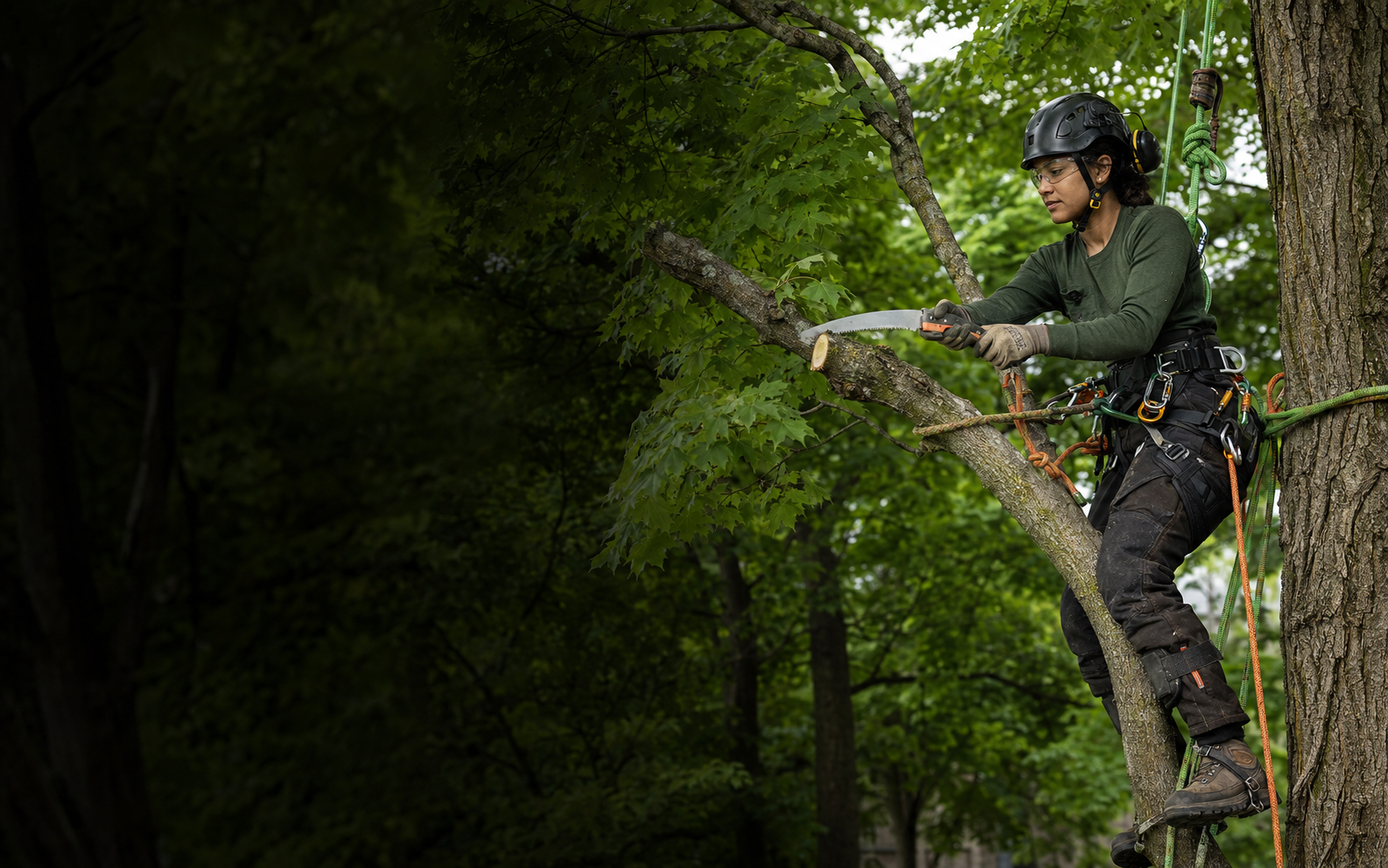
An Arborist transplants, maintains and removes trees and woody plants using ropes, climbing systems, pruning tools, diagnostic tools and mechanized equipment. Arborists have knowledge in the science of arboriculture, the cultivation, management and study of individual trees, shrubs, vines, and woody plants. An Arborist carries out treatments for optimal tree health, managing pests, diseases, wounds and defects that impact trees and woody plants. Specifically, an Arborist:
THE CORE OF THE WORK
An Arborist transplants, maintains and removes trees and woody plants using ropes, climbing systems, pruning tools, diagnostic tools and mechanized equipment. Arborists have knowledge in the science of arboriculture, the cultivation, management and study of individual trees, shrubs, vines, and woody plants. An Arborist carries out treatments for optimal tree health, managing pests, diseases, wounds and defects that impact trees and woody plants. Specifically, an Arborist:
Not every Arborist performs every task. The mix changes with the employer, sector, workplace, equipment and level of responsibility.
TOOLS & TECHNOLOGY
ropes, saddles and climbing systems, chainsaws, handsaws and pole pruners, aerial lifts, cranes and chippers, diagnostic, cabling and bracing equipment, plant-health-care and soil tools.
WORKING CONDITIONS
work at height and suspended positioning; chainsaws, falling material and rigging forces; all-weather outdoor work; electrical and traffic hazards; physically demanding climbing and handling.
SAFETY FIRST
Training, supervision, safe procedures, appropriate PPE and stopping when conditions are uncertain are essential. Requirements vary by workplace and assignment.
STRENGTHS THAT GROW
ADVANCED SPECIALIZATIONS
These are advanced work directions within or adjacent to Arborist, not promises of separate credentials or pay. Requirements vary by employer, equipment, experience and any additional training or authorization.
Access crowns safely and respond to emergencies using rope systems.
Diagnose pests, disease, soil and water problems and apply treatments.
Evaluate defects, targets and likelihood of failure to guide decisions.
Dismantle hazardous trees while controlling heavy suspended pieces.
Manage public trees, inventories, planting and community canopy goals.
Protect electrical corridors through specialized pruning and hazard controls.
Advance into reports, appraisals, crew leadership or a tree-care business.
EVIDENCE BASE
Regulated, numerical and time-sensitive claims link to the authority used. Accessed and reviewed August 25, 2026.
Why might this career fit me?